

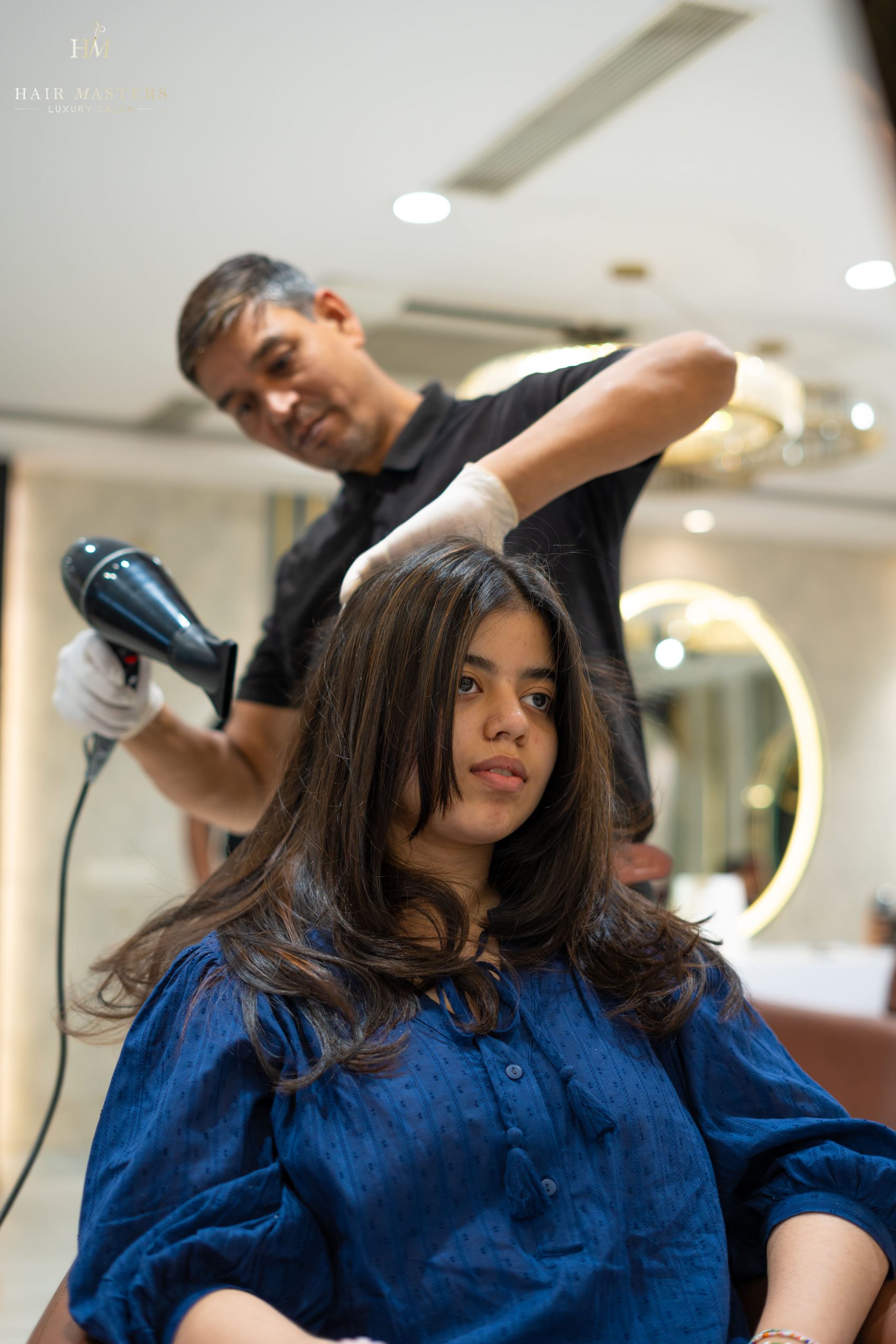
f your hair came out of winter looking decent and now, three months into summer, it feels like straw — you are not being dramatic. Sun damage to hair is real, and it compounds. UV rays break down the melanin in your hair (which is why color fades) and degrade the keratin that gives each strand its structural integrity. The result is hair that feels rough, looks dull, breaks easily, and refuses to hold any style. At Hair Masters, repairing sun-damaged hair is one of the most common requests we get in June and July, and the good news is that most cases are very treatable with the right salon interventions.
Key Takeaways
- UV Breaks Down Protein: Just like skin, hair loses structural protein under prolonged sun exposure. A protein treatment is the first step to rebuilding it.
- Color Fades Faster in Summer: If you color your hair, UV exposure oxidizes the dye molecules. A professional hair color touch-up and protective serum can extend your color life significantly.
- Order Matters: Moisture treatments before protein, or protein before moisture? Your stylist at Hair Masters will assess which your hair needs first based on its porosity.
- Prevention + Repair: Once treated, a keratin or glossing treatment acts as a protective barrier going forward.
How Sun Actually Damages Your Hair
Hair does not have a repair mechanism the way skin does. Skin cells turn over; hair cells do not. The section of hair that is damaged today stays damaged until it is cut off. This is why leaving sun damage unaddressed through summer means you are starting autumn with hair that is measurably worse than spring.
The damage happens at two levels. First, the cuticle — the outermost layer of each strand — gets roughened and lifted by UV exposure and heat, which is why sun-damaged hair feels coarse to the touch. Second, the cortex beneath loses protein bonds. This is what causes breakage. A strand that has lost cortex integrity does not stretch — it just snaps.
| Damage Level | What You Notice | Treatment Needed |
|---|---|---|
| Mild | Slight dullness, color fading faster than usual | Hair Spa + Glossing Treatment |
| Moderate | Rough texture, noticeable frizz, some breakage | Protein Treatment + Deep Conditioning |
| Severe | Significant breakage, splits to the mid-shaft, gummy when wet | Olaplex or Bond Repair + Structured Treatment Plan |
The Right Treatment for Your Damage Level
For Mild Damage: Hair Spa + Glossing
If your hair just looks dull and your color has gone flat, you are at mild damage. A professional hair spa restores moisture and temporarily smooths the cuticle layer, bringing back shine immediately. Pair this with a glossing treatment — a semi-permanent clear or tinted treatment that coats the cuticle and gives hair a mirror-like finish — and you will see a significant difference in one session.
For Moderate Damage: Protein + Moisture Therapy
If your hair feels rough, breaks more than usual, or you are seeing frizz that was not there before summer, you need to rebuild protein first, then follow with moisture. This sequence matters. Applying moisture to highly porous, protein-depleted hair without first addressing the structural gaps often gives temporary results that do not last.
At Hair Masters, we assess hair porosity before recommending a treatment plan. High-porosity hair (which is what sun-damaged hair typically becomes) absorbs moisture quickly but loses it just as fast. A protein treatment seals some of those gaps in the cuticle, making subsequent moisture treatments far more effective and longer lasting.
For Severe Damage: Bond Repair Treatments
If your hair feels gummy or stretchy when wet, or if you are seeing breakage at the mid-shaft rather than just at the ends, the damage has reached the cortex — the inner structure of the hair. This level requires a bond-repair treatment. These treatments work at a molecular level, relinking the disulfide bonds inside the hair strand that UV and chemical damage break. They are not a quick fix — typically two to three sessions are needed — but the results are transformative for heavily damaged hair.
Should You Cut Before or After Treatment?
This is one of the most common questions our stylists get. The answer depends on your damage. If the worst damage is concentrated at the ends — which it usually is, since those are the oldest parts of your hair — trimming before treatment removes the most compromised sections and lets the treatment work on the healthier hair above. You get better results with less product.
If the damage is more evenly distributed (common in short hair), treat first, then trim to shape once the hair has recovered some of its integrity. Your stylist at Hair Masters will look at your hair and give you an honest recommendation specific to your situation rather than a blanket answer.
How to Protect Your Hair After Treatment
- Wait before washing: After most treatments, you should avoid washing for 48–72 hours to let the treatment fully bond with your hair structure.
- Use sulfate-free shampoo: Sulfates strip treated hair faster. Switch to a sulfate-free formula to extend the life of any treatment you get.
- Apply a UV-protection serum: Yes, these exist for hair. If you are outdoors regularly, a spray-on UV protectant applied before you step out makes a genuine difference in how quickly your treatment degrades.
- Avoid chlorine: Pool swimming undoes hair treatments quickly. If you swim, wet your hair with plain water before entering the pool (saturated hair absorbs less chlorine) and rinse thoroughly after.
Frequently Asked Questions
1. Can sun damage be reversed completely?
The existing damaged sections cannot be reversed — hair does not regenerate. What treatments do is repair the structure of the damaged sections enough to make them functional and manageable again, and protect the new growth coming in. If the damage is severe enough, a trim is ultimately the cleanest solution.
2. My hair is color-treated and sun-damaged. Can I still get a treatment?
Yes, and you probably need one more than most. Color-treated hair is already more porous and more vulnerable to UV damage. Tell your stylist both facts — they will recommend a treatment formulated to work with chemically processed hair and avoid anything that conflicts with your color.
3. How often should I come in for treatment if my hair is badly sun-damaged?
For moderate to severe damage, once every 3–4 weeks through the summer months is a reasonable frequency. As the hair recovers, you can space out to once a month. Your stylist will tell you when you have reached a maintenance phase.
4. Does a hair spa help with sun damage or is it just relaxing?
Both. A professional hair spa at a quality salon uses treatment-grade masks that actually penetrate the hair shaft — not just coat it temporarily. The effect is not just cosmetic. That said, a hair spa alone is not enough for moderate or severe damage; it is best used as a maintenance treatment once you have addressed the structural damage with a protein or bond-repair treatment.
Conclusion
Sun-damaged hair is not a cosmetic problem you just have to live with until your next trim. The right salon treatments can genuinely rebuild what summer has stripped out, and starting the repair process before the monsoon hits means your hair is in a much better position going into the second half of the year.
Book a hair damage consultation at your nearest Hair Masters location. We will assess your hair’s condition, identify the damage level, and recommend the most efficient treatment path — so you are not spending money on treatments your hair does not actually need right now.